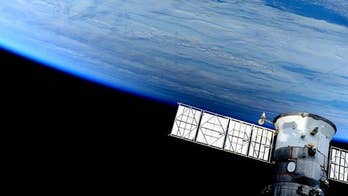
May 2, 2016 Astronauts snap amazing total solar eclipse photos from space Astronauts on the International Space Station caught sight of an amazing solar eclipse March 20, and they have the photos to prove it.
May 2, 2016 Total solar eclipse on Friday: How to watch it live online Even though most people around the world won't be able to see Friday's total solar eclipse in person, anyone with an Internet connection can watch it live online thanks to two webcasts featuring the cosmic event.
May 2, 2016 Major solar storm hits Earth A severe solar storm smacked Earth with a surprisingly big geomagnetic jolt Tuesday, potentially affecting power grids and GPS tracking while pushing the colorful northern lights farther south, federal forecasters said.
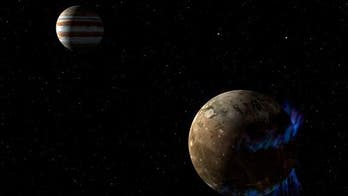
May 2, 2016 Jupiter's moon Ganymede has a salty ocean with more water than Earth A salty ocean is lurking beneath the surface of Jupiter's largest moon, Ganymede, scientists using the Hubble Space Telescope have found.
May 2, 2016 Space ‘rain’ and black holes solve galactic star-making mystery For decades, the reason why some galaxies produce more stars than others has remained a mystery. However, a team of astronomers at Michigan State University now believes they may have finally solved the riddle.
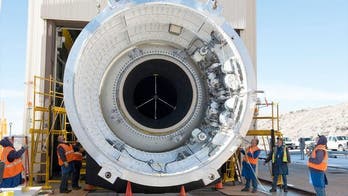
May 2, 2016 Test of world's largest solid rocket steeped in space shuttle history When the world's largest solid rocket motor is ignited in Utah this week, it will not leave the ground, but it will fire with components that have a long spaceflight history.
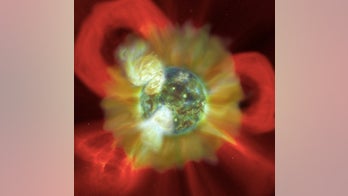
May 2, 2016 Fierce 'superflares' from the Sun zapped the infant Earth Our young sun may have routinely blasted Earth with gobs of energy more powerful than any similar bombardments recorded in human history.
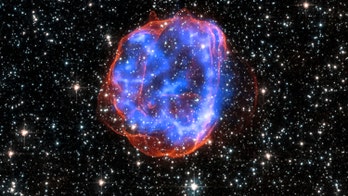
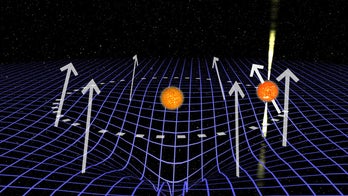
May 2, 2016 Warp in space-time swallows pulsar Astronomers have watched a pulsar some 25,000 light-years from Earth slip from view, swallowed by a warp in the fabric of spacetime.
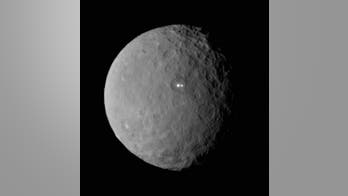
May 2, 2016 Ceres science: NASA probe to study dwarf planet's bright spots and more There's something highly reflective on Ceres twinkling at NASA's Dawn spacecraft, and scientists hope to figure out what it is after the probe arrives at the dwarf planet later this week.
May 2, 2016 NASA probes catch solar shockwave in action for the first time For the first time ever, NASA’s Van Allen Probes caught the before and after effects of a solar shockwave as it was happening. The event, which occurred on October 8, 2013, was triggered by an explosion that erupted on the sun’s surface, sending a shockwave of solar wind careening through space. After passing the moon, the shockwave hurtled toward Earth before running head-on into the magnetic field surrounding our planet. This impact then set off a magnetized sound pulse, which reverberated around Earth.