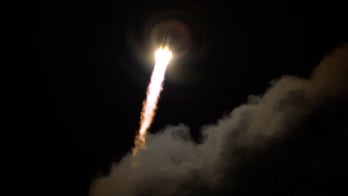
December 10, 2015 Europe launches satellite that will map 1 billion stars, hunt for new planets The European Space Agency is preparing to launch a satellite that will produce the most accurate three-dimensional map of our part of the Milky Way.
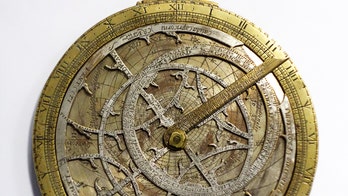
December 10, 2015 Swedish castle museum to recover missing rare astronomical astrolabe made in 1590 A rare 16th-century scientific artifact used in astronomical measurements that has been missing from a Swedish museum for a decade has been recovered and will be returned this week, the London-based Art Loss Register says.
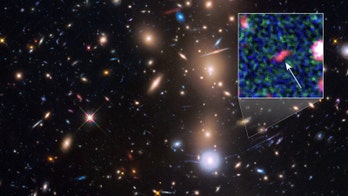
December 3, 2015 Hubble spots faintest galaxy from early universe Astronomers using NASA’s Hubble and Spitzer space telescope have found what they believe is the faintest object ever seen in the early universe, a galaxy that existed 13.8 billion years ago or about 400 million years after the big bang.
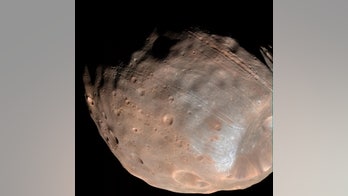
November 23, 2015 Mars will become a ringed planet when Phobos dies Mars’ doomed moon Phobos may leave its parent planet a parting gift. A new study shows the moon is likely to break apart before it hits the atmosphere, creating a debris ring that will encircle Mars for millions of years.
November 20, 2015 Stars in distant galaxies found to have a pulse This behavior has been seen in our own Milky Way but it has been difficult to document in distant galaxies. Now, a team of researchers from Harvard and Yale have for the first time show that stars that are located tens of millions of light years away have a heartbeat if you will.
November 18, 2015 Astronomers find most distant object in solar system Using the Subaru telescope located on the summit of Mauna Kea, Hawaii, scientists in October spotted what they believe is a dwarf planet, which is located about 9.6 billion miles from the Sun – or 100 times further from the Sun than the Earth is and three times further from the Sun than Pluto is.
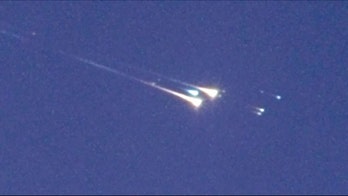
November 13, 2015 Mysterious space junk makes spectacular re-entry into Earth's atmosphere A mysterious piece of space junk dubbed WT1190F made a spectacular re-entry into Earth’s atmosphere early Friday, as predicted by scientists. Experts, however, are unsure whether it splashed down in the Indian Ocean, as initially expected.
November 12, 2015 Scientists discover closest-ever Earth-sized exoplanet The planet, named GJ 1132b, is orbiting a small star located a mere 39 light-years from Earth, making it the closest Earth-sized exoplanet yet discovered. It’s believed to be about 440 degrees Fahrenheit on its rocky surface, and is likely tidally locked, meaning that it has a permanent day and night side, presenting the same face to its star.
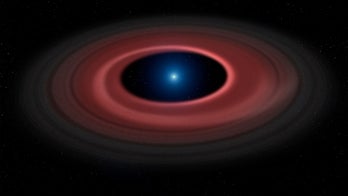
November 11, 2015 Here's what happens when an asteroid is ripped apart by a dead star Stunning glowing ring image it the result of an asteroid being ripped apart by a dead star known as SDSS1228+1040.
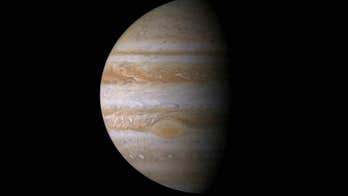
November 6, 2015 Space bully: Jupiter may have kicked giant planet out of its orbit It seems that some planets just can’t play nicely together. Scientists at the University of Toronto have discovered that Jupiter may have ejected another planet from the Solar System 4 billion years ago.