91±¬ÁÏ

Fast Food - Page 200

McDonald's 10 most spectacular menu flops
March 20, 2018

McDonald's 10 most spectacular menu flops

The McDonald’s that we know and love, identified by those iconic Golden Arches, had humble beginnings. The restaurant first opened as McDonald’s Bar-B-Q Restaurant in San Bernardino, Calif., in 1940, serving a simple menu of hamburgers, cheeseburgers, fries, and shakes. Over the next several years, founders Dick and Mac McDonald renovated the restaurant and highlighted their $0.15 hamburger.   In 1954, Ray Croc visited the restaurant and talked the McDonald brothers into creating a national burger chain. The first franchised McDonald’s location opened in Des Plaines, Ill., in 1955 incorporating the very first Golden Arches, designed by architect Stanley Meston. Today, McDonald’s is the largest hamburger fast-food chain in the world, and serves more than 58 million customers daily. While McDonald’s continues to have a set staple menu throughout most of their locations, the chain is continuously trying to invent both local, national and international menu items to bolster its offerings.   For instance, specialty menu items such as the Big Mac or Chicken McNuggets have been huge commercial successes across the board. But other items have been launched, and have subsequently vanished just as quickly. Items such as the Bacon Bacon McBacon, the Chicken Parmesan Sandwich, and the Home-Fried Chicken never quite caught on with American consumers. In local markets, McDonald’s has even rolled out items like the McLobster on the East Coast, poutine in Canada, and the McCrab in parts of Maryland, Delaware, and Virginia In order to assemble our list of the top 10 McDonald’s flops, we took into account the cost of the (unsuccessful) advertising campaign, the lack of commercial success of an item, as well as the duration of which the particular product or promotion existed. So the least successful of the lot were ones that not only came and went quickly, but wasted plenty of the company’s money as well. McDonald’s continues to roll out new products all the time; some will make it big, others will vanish off the menu without a trace.

The coolest Frappuccino flavors you’ve never heard of
March 20, 2018

The coolest Frappuccino flavors you’ve never heard of

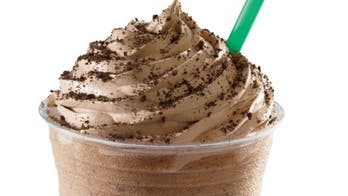
Ah, the Frappuccino. A Starbucks commodity. A word that wasn’t even on our tongues just 20 years ago. The Starbucks Frappuccino essentially ushered in the second wave of coffee in America, with sugary sweet, frothy concoctions that consumers flocked to. And to look back on the story of Frappuccinos — and the crazy flavors made across the globe — is pretty fun. It’s hard to believe there was a time when Starbucks wasn’t ruled by Frappuccinos, but as CEO Howard Schultz explains in his book Pour Your Heart Into It, he wasn’t always a believer. Schultz writes that he resisted Southern California’s granitas trend in the 1990s because he believed the sugary, frozen drinks diluted the integrity of Starbucks’ coffee. Still, three store managers in Southern California experimented with making Frappuccinos beginning in 1994, using a powdered base (that everyone hated), and eventually using freshly brewed coffee. Eventually, the beverage director handed over the new Frappuccino recipe to a team of food consultants, who came up with a Frap made with low-fat milk. Eventually, everyone, customers and Schultz alike, saw the light — or should we say, saw the drink. The name Frappuccino actually comes from the former coffee chain The Coffee Connection, which Starbucks acquired back in 1994. (In fact, the founder of The Coffee Connection made his own cold, slushy coffee for sale, but Schultz noted that Starbucks didn’t like the drink.) Despite the hurdle of introducing Frappuccinos (and blenders) to the 550 existing Starbucks stores, the Frappuccino was immediately a hit with customers. In 1996, Schultz notes in his book, the first full fiscal year the Frappuccino was sold, Starbucks sold more than $52 million worth of the drinks. It was even named one of the best products of the year by Businessweek. What’s crazy to think is just how Schultz and the Starbucks team brought the Frappuccino to existence (Schultz writes in the book, "I was wrong, and I was delighted about it"). He writes: "Perhaps the most remarkable thing about this story is that we didn’t do any heavy-duty financial analysis on Frappuccino beforehand… No corporate bureaucracy stood in the way of the Frappuccino. It was a totally entrepreneurial project, and it flourished with a Starbucks that was no longer a small company. Even when I doubted it, it went ahead." We now know who to thank for such a drink (even if they’re, well, making it harder to fit into our summer swimsuits). Today, there are 17 Frappuccino flavors on the menu — but that’s just in the U.S. While Americans love their Caramel Frappuccinos (the number one selling Frappuccino in America), Starbucks customers across the globe have very different flavors to choose from. Most use local flavors and ingredients combined with the traditional Frappuccino coffee base that’s a staple in the Starbucks drink — and we sort of wish we could get our hands on them in the U.S. Click ahead to find the world’s most popular Frappuccino flavors, the flavors you’ve never heard of.

America’s top chain burgers
March 20, 2018

America’s top chain burgers

When you’re thinking inside the bun, when you deserve a break today, need to have it your way at a place where the fire’s ready, where you’re the boss and it’s your way, right away, what you want is what you get, and they love to see you smile, it’s a good time for the great taste. That’s right, face it, you need a fast-food hamburger. Maybe it’s one that takes two hands to hold. Perhaps it’s two all-beef patties, special sauce, lettuce, cheese, pickles, and onions on a sesame seed bun. One thing is clear — if it doesn't get all over the place, it doesn't belong in your face. Whether it’s the best food for fast times, or you’re just loving it, there’s a time and a place for fast-food burgers, and at that moment, you don’t want to be wondering where’s the beef — you want one of America’s top 10 chain burgers. So what are they? Burger slogans aside, if you’re a burger snob in the mood for fast food, you likely won’t be screeching to the side of the road for any of the burgers served by the chains they represent unless it’s the only thing open. All the menu reinventions, commercials, and image rebranding by  McDonald’s, Wendy’s, Burger King, and Carl’s Jr., doesn’t hide the fact that their burgers just aren’t very good. And it’s not as though good fast-food burgers can’t be made without prices being jacked to ridiculous heights. Sure, it may cost a bit more to make a better burger, but how much? And it’s not as though you’re going to expect a chain of Minetta Tavern quickie-marts serving $26 Black Label Burgers basted with clarified butter at rest-stops along the highway. A Double-Double at In-N-Out is what, $3.20? A double cheeseburger is $2.80 at McDonald’s? How many people would pay $0.40 more for an In-N-Out burger than one from McDonald’s? That’s one reason that recent years have seen the rise of burger chains like Five Guys, Umami, Smashburger, and Shake Shack that are doing better, higher-quality burgers. So surveying the fast-food playing field, which spots serve the bestburger? In the same way the best burgers are the burgers that established your essential burger knowledge, the criteria for your mind’s burger framework, your favorite fast-food burger may be regionally dictated. Maybe it’s In-N-Out because you grew up out West. Maybe it’s Whataburger because you grew up in Texas. These days, chains are spreading out and becoming increasingly less regional. That sets up potential fast-food showdowns where customers can evaluate their favorites against those they’d traditionally have had to travel to try. A national fast-food burger pecking order has never been closer to being established by Americans who don’t have to leave home, or go farther than nearby states to be the judge of who makes a better burger. Establishing this pecking order, a list of America’s Top 10 Chain Burgers was done as part of The Daily Meal’s 2013 report to establish a list of the 40 Best Burgers in America. Because of America’s great love for this simple sandwich, and the expertise that has been developed in making them truly great, it was a huge task to narrow America’s most iconic food, the hamburger, to a select group. We searched for burgers in both small towns and big cities, examined local and national best-of lists both in print and online, and reached out to a group of some of America’s foremost burger experts to collect a list of national and local favorites, icons and ideals that were voted on by an expert panel to come up with a list truly that represents a pantheon of burger heroes. To give even the smallest burger joint its fair shake, chains with 15 or more locations weren’t included in that list, but in their own for The Daily Meal’s esteemed panelists to vote on. Burger King, Wendy’s, McDonald’s, Dairy Queen, and the other cookie-cutter spots along the highway — while nice things can be said about their onion rings, Frostys, french fries and Blizzards — were not considered for this category. For the chains that were considered, the quintessential, or signature burger from each was evaluated. The results were interesting. It’s likely that people from the West Coast will be outraged by the burger that edged theirs out for top billing. They can take consolation in the fact that it was a close call; voting was neck and neck, with the winner edging out the second placeburger by less than 5 percentage points. It’s a result that could be mirrored in the minds of the general population out West after the planned 2014 expansion of one burger chain on this list. Whataburger, Umami Burger, Five Guys — they’re all there, joined by the relative upstart of the crew, Iron Chef Bobby Flay’s Bobby’s Burger Palace. The truth is that wherever these burgers ended up on this list, you can trust that they’re a step above the rest, fast-food burgers worth eating.

Summer’s healthiest and unhealthiest coffee beverages
March 20, 2018

Summer’s healthiest and unhealthiest coffee beverages

As summer approaches at a rapid rate, many of us are carefully watching what we eat, but what about what we're drinking? Everyone appreciates a nice morning caffeine buzz in the form of an icy coffee drink, but unfortunately, many of us are blind to the fat, sugar, and high caloric content of these drinks. Luckily, it doesn’t have to be this way. Most venues will promote their new sugary additions to the menu because they may be more summery or outlandish, but there are a few of rules of thumb that will help you avoid unwanted fat and sugar when ordering your iced coffee at your favorite restaurant or coffee joint. For one, we know whipped cream, flavored syrups, and crazy toppings like drizzles or cookie crumbles will add on calories and fat. Plus, they take away from the coffee’s flavor, and isn’t that the real reason you’re ordering your beverage anyway? Also, buzzwords like "chill," "lotta," "supreme," and "blast," can almost guarantee that your drink will contain more sugar and calories than you want to ingest. That iced drink isn’t going to be any colder by adding "frozen" into the name, but you can almost certainly bet it will be unhealthy. Not all hope is lost, though — you can still find plenty of cold coffee treats to satisfy your cravings without busting your diet. We did some research and found out everything you need to know about your favorite restaurants and the summery coffee drinks they offer. By taking a good look at the calories, grams of fat, and sugar content in each medium-sized beverage, we were able to find the best, the worst, and the downright craziest drinks for you to enjoy — or avoid — this summer.

How to eat healthy at 16 fast-food chains
March 20, 2018

How to eat healthy at 16 fast-food chains

When you’re trying to eat healthy, a fast-food restaurant doesn’t exactly seem like a great dining option. Burgers, fries, and milkshakes probably aren’t your best bet if you’re on a diet. But over the past several years, fast-food chains have taken major strides to offer menu selections that are decidedly healthy. So when we’re hungry and have nowhere else to turn, a quick study of the menu board at these fast-food destinations can show that it’s not all so terrible after all. Right off the bat, it would seem that the burger joints would have the least healthy options, but there are some items that, surprisingly, aren't filled with bad ingredients and tons of calories. You're never going to mistake these spots for a wheatgrass bar, but in a pinch you can get out of there with minimal grease. Salads may seem the obvious choice, but aren't very healthy if loaded with breaded, fried chicken chunks, and creamy dressings. And keep in mind that while some sandwiches and entrées are healthier, that's often without the add-ons that boost flavor appeal. But the healthy choices don't have to be completely bland: When possible, ask for dressings, sauces, and condiments on the side so you can control the amount put on. And don't rule out combos completely — a combo of two items can be good, as long as the total intake doesn't end up being more than one unhealthy item. Lean toward items with vegetables, and though they're often hard to find at these places, vegetarian items when possible. These dishes are usually more health-friendly, they're nutritionally adequate, and they're usually not (as) steeped in grease. And if items are offered grilled or steamed, those are obviously a better option than their fried counterparts. Aside from meals, beverage and dessert choices can also be made healthier. Of course soda is the mainstay beverage of fast-food counters, but it's easy enough to get water or unsweetened iced tea; add lemon to them if available. If you're watching your weight, you may be skipping dessert, but it's nice to have options if you've got a sweet craving. And even the fastest of fast-food places offer a fruit option; we won't pretend that it'll be as fun as a giant shake or sundae, but at least we have more choices now. Nearly every fast-food chain posts nutritional information on their websites and makes it available at their restaurants, so be sure to take a quick look if you want to get the inside scoop on what you're eating. We checked out the nutrition information for just about all of the leading fast-food brands in search of the healthiest items on their menus. Read on to learn what we discovered.

Surprising origins of the 10 biggest chain restaurants
March 20, 2018

Surprising origins of the 10 biggest chain restaurants

It’s not easy to run a restaurant. It’s even more difficult to run a chain restaurant. For one, you need to serve food that people will want to eat, all across the region, country, or world. Then you need to keep the menu fresh and up-to-date, all while making sure that every single dish in every single location looks and tastes exactly the same. And after all of that’s been done, you need to launch marketing and advertising campaigns to fill the seats, and figure out what’s going wrong if they’re not getting filled. To repeat, it’s not easy to run a successful chain restaurant. Chain restaurants as we know them today only came about within the past 30 or so years, largely because that genre of restaurant, called fast casual, is only about that old. There were plenty of hamburger chains and diner chains dating back to the 1950s, but the whole concept of going to a casual restaurant with your family, having a beer and ordering inexpensive food that makes everyone happy, and leaving with a doggie bag is still remarkably new. In fact, when Larry Lavine opened the first Chili’s in 1975 in Dallas, people lined up around the block on a daily basis just to eat a bowl of chili and drink a margarita. In many cases, the origins of today’s most popular chain restaurants aren’t exactly what you might expect. Many of them had different names when they were founded, as well as different menus and concepts. With the exception of Olive Garden, which was invented by General Mills as opposed to a single lucky entrepreneur, most of the big chains got their start when someone opened up a restaurant that just happened to do really, really well. And if it happened to fall into that new style of fast casual dining, wealthy investors were waiting around every corner during the '70s and '80s to take advantage of this newest dining trend. Once a chain restaurant is well-funded and its concept and menu are fully in place, it’s amazing how quickly it can spread. Panera Bread, one of the youngest major chains, only got its start 20 years ago, but today there are more than 1,600 units and it’s rapidly growing. Whether it’s an Australian-themed steakhouse, an inexpensive wing joint, or a New England-style seafood restaurant, these chains are known and patronized by millions and millions of Americans, and they all have really interesting backstories.  

America's most expensive diner food