91±¬ÁÏ

Cooking Basics - Page 38

Everything you need to know about flour
March 20, 2018

Everything you need to know about flour

All-purpose flour is called "all-purpose" for a reason — because it can be used to make everything from muffins to pizza, cakes to cookies, and quick breads to pie crust. Just because it’s all-purpose, though, doesn’t mean it’s the best choice for your baking. With lots of different varieties of flours out there, it’s no surprise that certain flours are best for certain types of baking projects. If you’re looking to fine-tune your baking skills, learning about other flours and which ones are best for certain types of baked goods can make your baking even better. When considering different types of flours, there is one very important factor that will greatly affect the outcome of your baking: the protein levels. Lower protein percentages give baked goods a more tender texture, and higher protein flours result in thicker, doughier consistencies. Most commercially available flour is made from hard winter wheat, which has a higher protein level, or soft winter wheat, which has lower levels of proteins. Understanding the wheat and protein levels of the flours you’re using to bake with will help you understand your baking better, too, and will help you get the results you desire. If you want to improve your baking, or just want to know why you should use something other than all-purpose, it’s time that you learn everything you need to know about flours. This guide will walk you through some of the most essential flours out there, and will help you to be more informed about your baking.

10 steps to making gelato like a pro
March 20, 2018

10 steps to making gelato like a pro

There’s a question that all ice cream lovers must face sometime during their on-again, off-again relationship with the frozen confection. The question is one we are ashamed to ask, but eventually have to wonder, "What the heck is gelato?" Sure, we know it’s different. But what makes it that thick, creamy Italian delicacy we yearn for? For help solving the mystery, FoxNews.com went to one of New York City’s resident gelato experts. Michelle Catarata is a professional pastry chef, trained at the Institute of Culinary Education in the heart of New York City. Now her main focus is gelato. When Catarata shifted to making ice-based desserts, she took her background in baking with her.  At Sorella and sister gelato shop, Stellina, the former pastry chef uses everything in her arsenal for inspiration. Some of her gelato flavor highlights include Brown Sugar Strawberry, S'mores and A Bee Named Elvis, which is honey gelato, banana, caramel and peanut nougats. Catarata says she grew up watching her grandmother cook for her family in Queens, N.Y. Eventually, Catarata was allowed to help with the baking and from that moment on, she was hooked. "I have such a high sugar tolerance," Catarata said, laughing as she explained what she liked to bake. "I’m surprised I’m not dead yet." For now, Catarata has focused her sights on gelato. In the kitchen of a quaint, East Village restaurant, she concocts all kinds of drool-inducing creations. And even her grandmother has come to try Catarata’s inventions. "It was one of the proudest moments of my life," she said, recounting the day her grandmother visited the gelateria. "That sounds so corny, but it’s true." To help us crack the case behind what makes gelato, well, gelato, Catarata has chosen her signature mocha flavor. So pull out that magnifying glass, Watson, you’re about to solve one of greatest dessert mysteries ever.

What to do with barbecue leftovers
The 8 drink inventions we could never do without
What are cronuts and how do I make them at home?
March 20, 2018

What are cronuts and how do I make them at home?

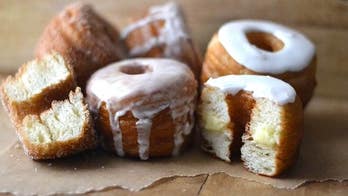
What could be better than a hybrid pastry of donut and croissant? The cronut, a "baked good heard round the mediasphere," according to Vogue magazine, is just that — flaky, buttery dough that's deep-fried to golden brown perfection, and then filled with cream and glazed. Since its debut in the spring of 2013, the cronut has launched into an international phenomenon, and with a dedicated following. With its burgeoning popularity, the donut-meets-croissant is in high demand — and has even found its way onto the black market. The mastermind behind the cronut craze is pastry chef and owner of Manhattan’s Domnique Ansel Bakery, Dominique Ansel, who invented the circular treat to blend his French upbringing with an American classic. Word on the street is that Ansel’s secrets include using croissant-like dough, which he then fries in grapeseed oil. The result is a light and flaky cronut that is finished in three ways: rolled in sugar, filled with cream, and topped with glaze. The cronut has become so popular that people can’t resist trying to replicate it, and news outlets and food and drink websites can't stop themselves from breathlessly covering new cronut developments every five minutes. ChicagoMag.com reports that a local Windy City bakery is serving a knockoff, dubbed the "dossant." While on the West Coast, a San Diego, Calif., bakery is dishing up an imitation of the crazy pastry, appropriately titled "cray-nut." The cronut is even going international, with "frissants" popping up in Vancouver, and Down Under, reports the The Sydney Morning Herald, with "zonuts." One Las Vegas bakery, succumbing to the hype, is simply calling their version "One of Those." Oh, and, there are the people who think they’re the ones who created it to begin with, like one drama-loving soap opera-actress-turned-cook in Texas. As you may have guessed, we tried replicating it, too. Although Ansel and the rest of the bakery’s team are keeping mum on the coveted recipe, we got the inside scoop from a professional pastry chef who used to work for Ansel — before he created the cronut — on how to make croissant dough at home. Her keys to cronut success include, "Keeping the dough chilled, otherwise you’ll have a buttery mess on your hands." Also, "When initially mixing the dough, resist the urge to overmix. Just mix until the dough is a consistent texture." Although the process seems laborious, she says,"This dough is easier to make at home than most [people] expect." We were up for the challenge and based our recipe on classic croissant dough. Taken from what we know about the original cronut recipe, we fried in ours in grapeseed oil and finished it by giving it a dusting of sugar, filling it with cream, and topping with glaze. While Ansel’s version takes a lengthy three days to complete, we’ve skillfully compressed it down to one — if you start early! So while cronut-craving tourists and New Yorkers are lining up, hundreds-deep, to get their hands on one, you’ll have no problem scoring the elusive pastry with our recipe at home — that we think just might rival the original.

Top 10 barbecue grills