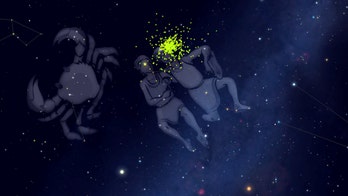
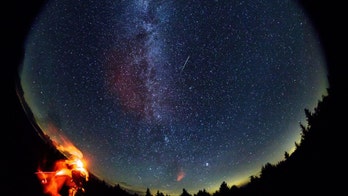
AIR AND SPACE December 14, 2021 Geminid meteor shower: What to know Sky-gazers around most of the world will be able to glimpse the Geminid meteor shower this week.
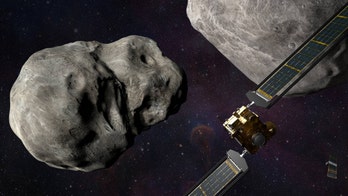
NASA November 20, 2021 NASA to crash spacecraft into asteroid to test planetary defense: What to know NASA's Double Asteroid Redirection Test (DART) mission, the world's first planetary defense test mission, is scheduled to launch early Wednesday morning.Â
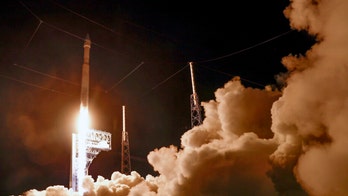
SCIENCE October 16, 2021 NASA's Lucy launches to Trojan Asteroids NASA's Lucy mission launched early Saturday from the agency's Kennedy Space Center at Cape Canaveral, Fla.
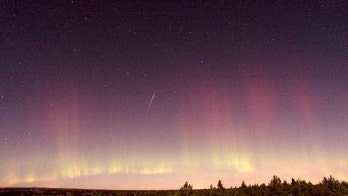
SCIENCE October 6, 2021 Draconid meteor shower: How to watch The Draconid meteor shower will reach its peak on Friday night in the sky across the Northern Hemisphere.Â
SCIENCE September 28, 2021 NASA: 'At least 5 fireballs' reported over US There were reports of at least five fireballs over the U.S. last week.Â
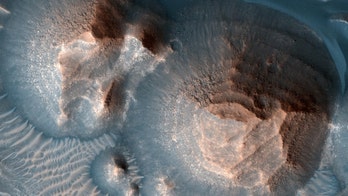
SCIENCE September 18, 2021 NASA confirms Mars region had thousands of ancient volcanic eruptions NASA scientists have found evidence that thousands of massive ancient volcanoes erupted on Mars.Â
SCIENCE August 10, 2021 How, when to watch the Perseid meteor shower The Perseids, considered the best meteor shower of the year, will peak on Wednesday night and into pre-dawn hours on Thursday.
SCIENCE July 28, 2021 Twin meteor showers will peak tonight — but viewing may be tricky Two meteor showers will grace the night skies this week – though the moon may make observing them nearly impossible.
US July 27, 2021 Fireball blazes across Texas sky Texas residents were stunned to see a fireball blaze across the sky on Sunday night.
AIR AND SPACE July 25, 2021 Asteroid the size of Giza pyramid, Taj Mahal to pass 'close' to Earth The 2008 GO20 asteroid is between 318 and 720 feet tall (220 meters) and has drawn comparisons to a number of famous world structures to convey just how big it is.
SCIENCE July 2, 2021 Before an asteroid wiped them out, dinosaurs were already in decline: study A study published in the journal Nature Communications suggests that dinosaurs were in decline for as many as 10 million years prior to the Chicxulub, Mexico asteroid.