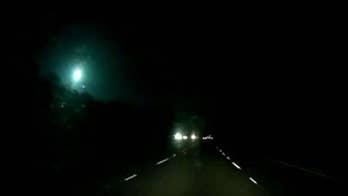
March 31, 2019 Meteor lights up the skies over Florida with bright flash A mysterious fireball that lit up the skies over Northern Florida on Saturday night turned out to be a meteor that was picked up on weather radar, according to officials.
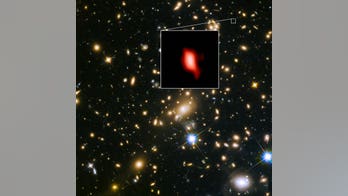
March 28, 2019 Universe quickly spawned stars after Big Bang, ancient galaxy shows Observations of the most distant galaxy ever identified revealed traces of oxygen from at least one previous generation of stars, a sign that star formation got off to an early start.
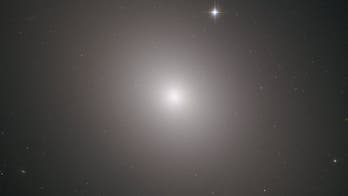
March 27, 2019 Hubble Telescope reveals what 200 billion stars look like Two incredible new images from the Hubble Space Telescope show galaxies in all their shining glory.
March 26, 2019 World's largest atom smasher may have just found evidence for why our universe exists For the first time ever, physicists at the world’s largest atom smasher have observed differences in the decay of particles and antiparticles containing a basic building block of matter, called the charm quark.
March 25, 2019 Astronomers find fossils of early universe stuffed in Milky Way's bulge Astronomers peered into the dusky bulge of the Milky Way and found some of the oldest known stars in the universe.
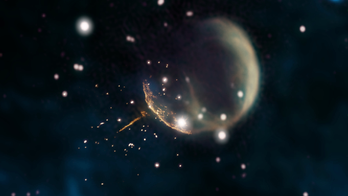
March 25, 2019 Spinning star hurtles through space at 2.5 million Mph after swift kick from supernova Astronomers have clocked a pulsar careening through space at a mind-boggling 2.5 million mph (4 million km/h).
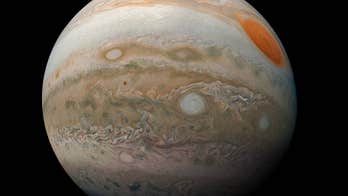
March 22, 2019 Striking NASA picture shows Jupiter's storms in stunning detail NASA has released an incredible image of Jupiter’s famous Great Red Spot and swirling storms in the planet’s southern hemisphere.
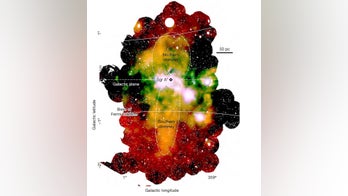
March 21, 2019 These two cosmic 'chimneys' could be fueling the galaxy-sized bubbles looming over the Milky Way The supermassive black hole at the center of our galaxy is a bit like the hearth at the center of a cozy pub.
March 20, 2019 'Full worm supermoon' lights up the sky in stunning pictures Skygazers are enjoying the ‘full worm supermoon,’ the third and final supermoon of 2019.
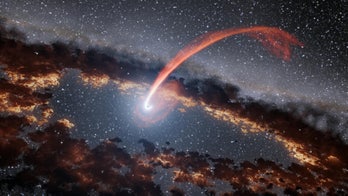
March 19, 2019 Aliens might shoot lasers at black holes to travel the galaxy An astronomer at Columbia University has a new guess about how hypothetical alien civilizations might be invisibly navigating our galaxy: Firing lasers at binary black holes (twin black holes that orbit each other).